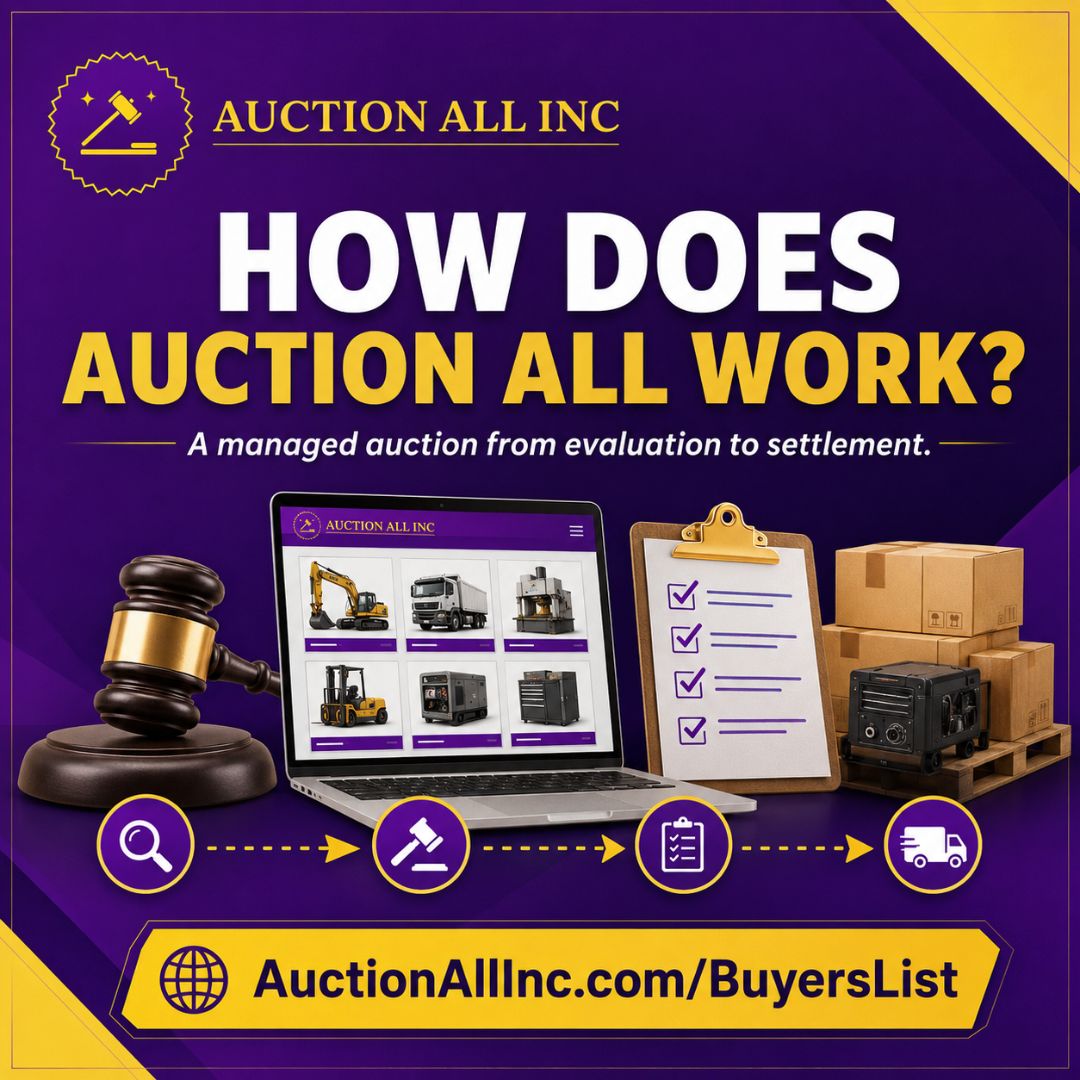
How Auction All Works: From Evaluation to Settlement
How Auction All Works
Selling a house full of items, a business asset list, a collection, or a few valuable pieces can feel overwhelming when you do not know where to start. A managed auction gives the process structure. Instead of guessing prices, handling one buyer at a time, or letting useful items sit too long, an auction helps move assets through a clear path from evaluation to settlement.
Whether someone is handling an estate, consigning select items, clearing space, or preparing for a liquidation, each step works better when it is organized before bidding begins.

Start With the Assets
Every auction starts with one basic question: what needs to be sold?
The answer may include furniture, antiques, tools, home decor, vehicles, boats, collectibles, business equipment, general merchandise, real estate, or a full property of mixed items. Some pieces may be ready to sell right away. Others may need to be sorted, grouped, photographed, or reviewed before they make sense in an auction.
The timeline matters too. An estate auction may move differently than a consignment auction with only a few pieces. A business liquidation may need to account for access, storage, deadlines, or removal needs. Starting with the assets helps the auction team understand what is involved, what the seller wants to accomplish, and how the items should be presented.
This first step also helps sellers feel less overwhelmed. Instead of looking at everything as one large project, the assets can be reviewed in a more practical way.

Build the Catalog
Once the assets are reviewed, the catalog begins to take shape.
The catalog is what online bidders use to decide what they want to bid on. Clear photos, useful descriptions, lot titles, and visible condition details help buyers feel more confident. A strong catalog does not need to make every item sound perfect. It needs to help bidders understand what they are looking at.
A furniture buyer may want to see the style, size when available, and visible wear. A tool buyer wants to know what is included in the lot. A collector may look for maker marks, age, material, or close-up photos. A vehicle or boat buyer may need enough detail to decide whether the item is worth reviewing further.
For sellers, cataloging creates order. A room, garage, warehouse, or storage area becomes a set of organized lots that buyers can browse online. That makes the auction easier to follow and easier to market.

Market the Auction
An auction needs the right buyers to know it exists.
After the catalog is prepared, the sale needs visibility. Marketing helps connect the auction with people who are already interested in bidding. That may include local auction buyers in Brevard County, collectors, resellers, families shopping for furniture, or buyers interested in tools, vehicles, boats, antiques, decor, and general merchandise.
This is where Auction All’s Buyers List matters. Buyers who stay connected are more likely to see upcoming auctions and new items that match their interests. For sellers, that means the auction is not simply posted online and left alone. It is shared with people who understand auction bidding and want to know what is coming next.
Good auction marketing is not about making unrealistic promises. It is about putting the auction in front of a relevant audience and giving buyers enough information to participate.

Bidders Set the Action
Once the online auction is live, registered buyers drive the action.
This is one big difference between auctions and regular selling. Instead of setting one fixed price and waiting for one person to agree, the auction allows interested buyers to compete. Each bidder decides what an item is worth based on the photos, description, condition, demand, and their own plans for the item.
For buyers, this creates opportunity. They can browse listings, compare lots, set a budget, and bid on items that make sense for them. Some buyers are looking for household items. Others are searching for collectibles, resale inventory, tools, equipment, or unique finds.
For sellers, competitive bidding can help reveal demand. Some items are hard to price through a private sale because the market is not always obvious. In an auction, interested bidders help determine the final result through their activity.
Buyers should still read before they bid. Online auctions often include as-is items, pickup expectations, and bidder responsibilities. Checking the photos, descriptions, terms, and pickup information helps avoid surprises after the auction closes.

Complete Pickup and Settlement
The auction does not end when bidding closes.
After the final bids are in, the process moves to payment, pickup, removal, and settlement. This part is important because the auction still has to finish cleanly. Buyers need to collect what they won. Sellers need the assets moved through the process and the sale settled according to the auction arrangement.
Pickup planning matters. A small collectible lot is different from a large piece of furniture, tool lot, equipment item, vehicle, boat, or business asset. Buyers should review the item size, bring help when needed, and arrive prepared for removal. Good planning makes pickup smoother for everyone.
For sellers, this is where a managed auction can be especially helpful. The work does not stop at posting items online. The auction process continues after bidding closes so the sale can move from interest to completion.
Why the Auction Process Works
A managed auction gives sellers structure and buyers access.
Sellers get a clear path: assets are reviewed, cataloged, marketed, sold through online bidding, picked up, and settled. Buyers can discover local auction items and compete for what they want.
That is why Auction All is a practical option for estates, consignments, collections, antiques, furniture, tools, home decor, general merchandise, vehicles, boats, business assets, real estate, and full liquidations in Titusville and Brevard County. The process works because it brings organization to the seller side and opportunity to the buyer side.
Want to stay updated on upcoming auctions and new items? Join the Buyers List at AuctionAllInc.com/BuyersList and stay connected with Auction All.
