
Liquidating Business Assets? How a Managed Auction Can Help
Liquidating Business Assets? How to Turn Equipment, Inventory, and Fixtures Into a Structured Sale
When a business closes, relocates, renovates, or downsizes, one of the biggest practical questions is what to do with the assets that are no longer needed. Equipment, inventory, shelving, office furniture, tools, fixtures, vehicles, and specialty items can quickly become a storage problem if there is no clear plan for selling them.
A managed business liquidation auction can bring those assets into one organized process. Instead of handling one buyer, one listing, and one pickup at a time, the business can prepare assets for a structured sale with defined lots, clear information, online bidding, and coordinated removal.
For business owners and representatives in Titusville and Brevard County, that structure can make an important transition easier to manage.

Identify What Is No Longer Needed
The first step is deciding what should actually be sold.
Walk through the business and separate assets that will stay from assets that are no longer part of the operation. This may include excess inventory, unused tools, office furniture, warehouse shelving, restaurant or retail fixtures, machinery, displays, storage systems, vehicles, or other business equipment.
It helps to think beyond what looks valuable. An item that is no longer useful to your business may still be useful to another business, reseller, contractor, collector, or individual buyer.
Creating a working inventory also helps prevent confusion. Note the major items, quantities, general condition, and where they are located. If certain equipment is still being used during the transition, identify when it will become available.
Unused assets still take up space and require attention. A clear inventory gives the liquidation process a starting point.
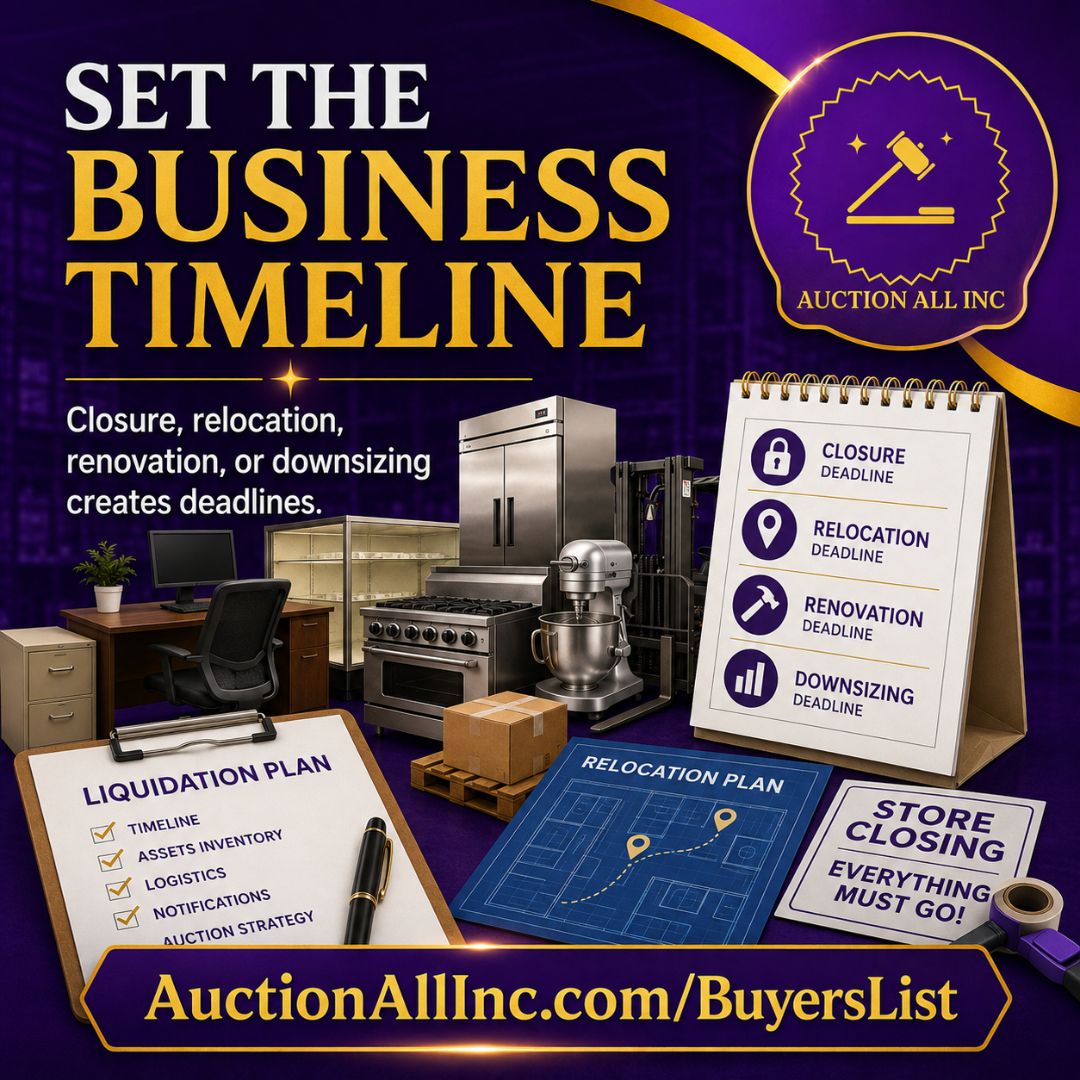
Set the Business Timeline Before the Sale
Business liquidations often happen because another deadline already exists.
A lease may be ending. A location may be closing. A renovation may require the space to be cleared. A company may be downsizing or moving equipment to another facility.
Before preparing the auction, identify the date by which the property needs to be sold and removed. Then work backward.
The timeline should allow enough room for cataloging, photography, marketing, bidding, payment, and pickup. Rushing these steps can create avoidable problems, especially when buyers need to arrange trailers, trucks, labor, or equipment to remove large assets.
It is also important to identify access limitations in advance. Loading areas, elevators, gates, utilities, parking, and hours of access can all affect how buyers remove purchased items.
A defined timeline helps the auction team and seller organize the sale around the real needs of the business.
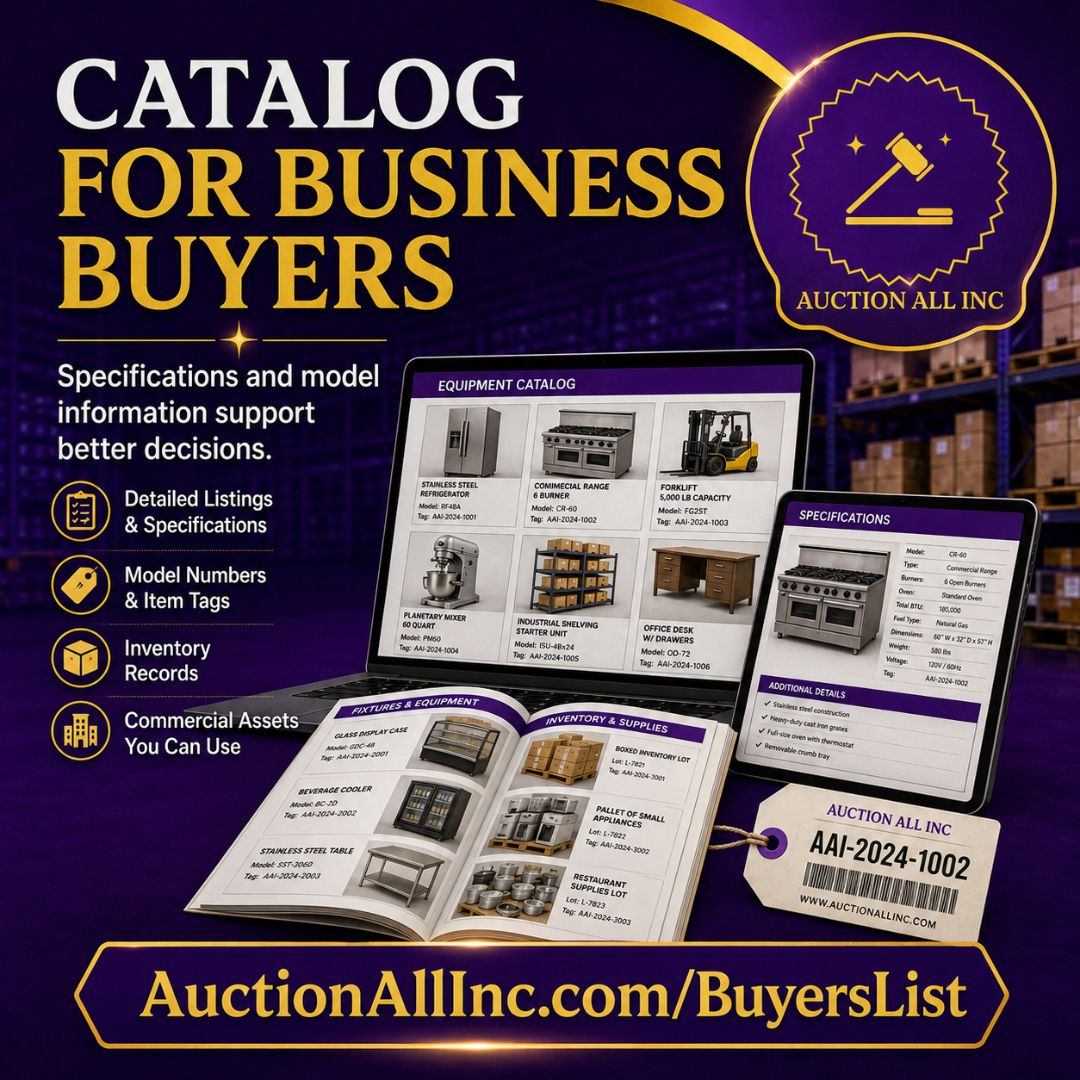
Catalog Assets for Business Buyers
Business buyers often need more information than a simple item name.
Whenever possible, gather useful details such as manufacturer, model number, dimensions, capacity, voltage, quantity, included accessories, visible condition, and known operating status. For inventory, note whether items are sold individually, by case, by shelf, or as a larger group.
Clear photographs are just as important. Buyers may want to see control panels, labels, model plates, connections, wear, attachments, or the overall setup of the equipment.
This information helps bidders decide whether an asset fits their own business, workspace, or resale plan.
Accurate descriptions do not need to promise performance or value. The goal is to give buyers enough information to evaluate the lot based on the auction listing and their own inspection when available.
A well-organized catalog can also make a large liquidation easier to understand. Instead of seeing a room full of equipment and inventory, buyers can review individual lots with consistent details.

Reach More Than Walk-In Buyers
One advantage of an online auction is that the potential audience is not limited to people who happen to visit the business.
Specialized assets may appeal to buyers outside the immediate neighborhood. Contractors may be looking for tools. Restaurant operators may need fixtures. Resellers may want bulk inventory. Small businesses may be searching for shelving, office furniture, or equipment at auction.
Online bidding gives those buyers a way to review the catalog and compete for the assets that fit their needs.
That broader exposure can be especially useful when a liquidation includes many different categories. One bidder may be interested in machinery while another is focused on furniture or inventory.
Good marketing still depends on good information. Clear titles, useful photos, organized lots, and accurate descriptions give buyers more confidence before they bid.
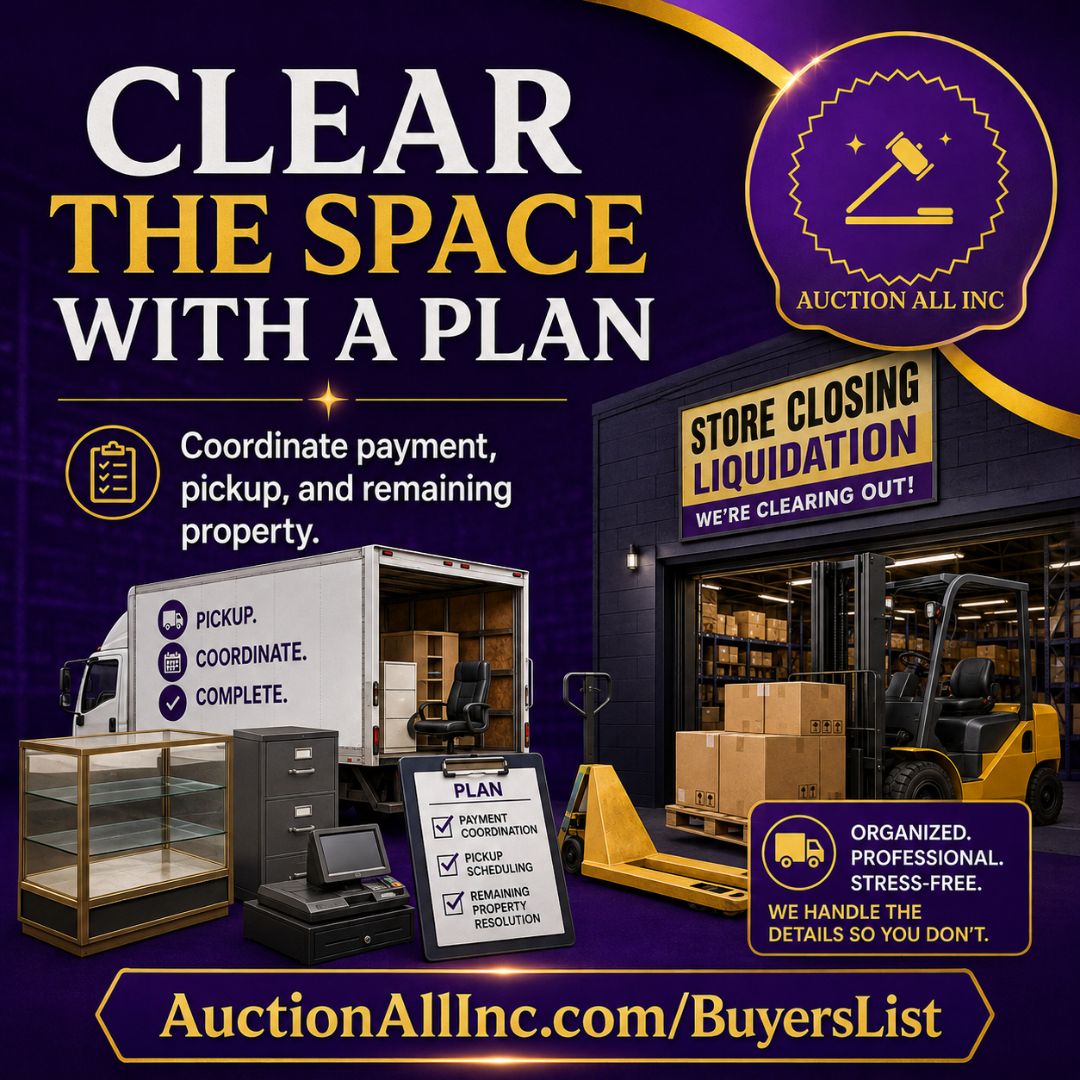
Clear the Space With a Plan
The auction is not finished when bidding closes. Removal needs to be part of the plan from the beginning.
Consider which items can be carried out easily and which may require multiple people, tools, trailers, forklifts, towing, or other arrangements. Buyers should understand the pickup requirements before bidding so they can plan accordingly.
The seller should also know what will happen after sold property is removed. Remaining items, trash, personal documents, materials that are not part of the auction, and anything still needed by the business should be handled separately.
Coordinating payment, pickup, access, and remaining property helps keep the final stage of the liquidation orderly.
For businesses working against a closure or relocation deadline, this planning can be just as important as the sale itself.
A Managed Auction Creates Structure During a Business Transition
Liquidating business assets does not have to mean posting dozens or hundreds of separate listings and managing every buyer independently.
A managed auction can organize equipment, inventory, fixtures, furniture, tools, vehicles, and other assets into a single structured process. The key is to identify what is being sold, set the timeline early, provide buyers with useful information, market the auction beyond walk-in traffic, and plan removal before bidding begins.
Auction All helps buyers and sellers navigate local auctions in Titusville and throughout Brevard County with an organized, practical approach to estates, consignments, collections, business assets, and liquidations.
Want to stay updated on upcoming auctions and new items? Join the Buyers List and stay connected with Auction All.
